Learn from your investment mistakes – without letting them influence your decisions


Learn from your investment mistakes – without letting them influence your decisions
Every investor – no matter how experienced – makes mistakes. It might be buying the wrong stock, selling too late, or acting on emotion rather than analysis. Mistakes are inevitable, but they don’t have to define your future strategy. In fact, they can become your greatest teacher – if you learn from them constructively, without allowing them to dictate your next move.
Mistakes are part of the game
Investing is about probabilities, not certainties. Even the most seasoned investors experience losses. What matters is not whether you make mistakes, but how you respond to them. Many people react with frustration or self-blame, but it’s important to remember that markets are unpredictable by nature.
Accepting that mistakes are a normal part of investing helps you stay calm. It also gives you the mental space to analyse what went wrong without letting emotions take over.
Learn from your decisions – not just the outcome
A common trap is to judge a decision solely by its result. If an investment performs well, we assume the decision was good – and if it performs poorly, we assume it was bad. But a positive outcome can be luck, and a negative one can be the result of unforeseen events.
Instead, focus on evaluating your decision-making process:
- Did you have a clear strategy when you bought or sold?
- Was your decision based on research and data – or on instinct?
- Had you defined your exit plan in advance?
By focusing on the process rather than the outcome, you improve your method instead of simply reacting to results.
Læs også:



Don’t let emotions take control
Fear and greed are two of the strongest forces in investing. After a loss, fear can make you overly cautious – you might hesitate to invest again, even when opportunities are good. After a win, overconfidence can lead you to take excessive risks.
Both reactions are natural, but they can harm your long-term strategy. One way to counter this is to set clear rules for when to buy and sell, and to stick to them – even when markets are volatile. This helps you make decisions based on your plan, not your emotions.
Keep an investment journal
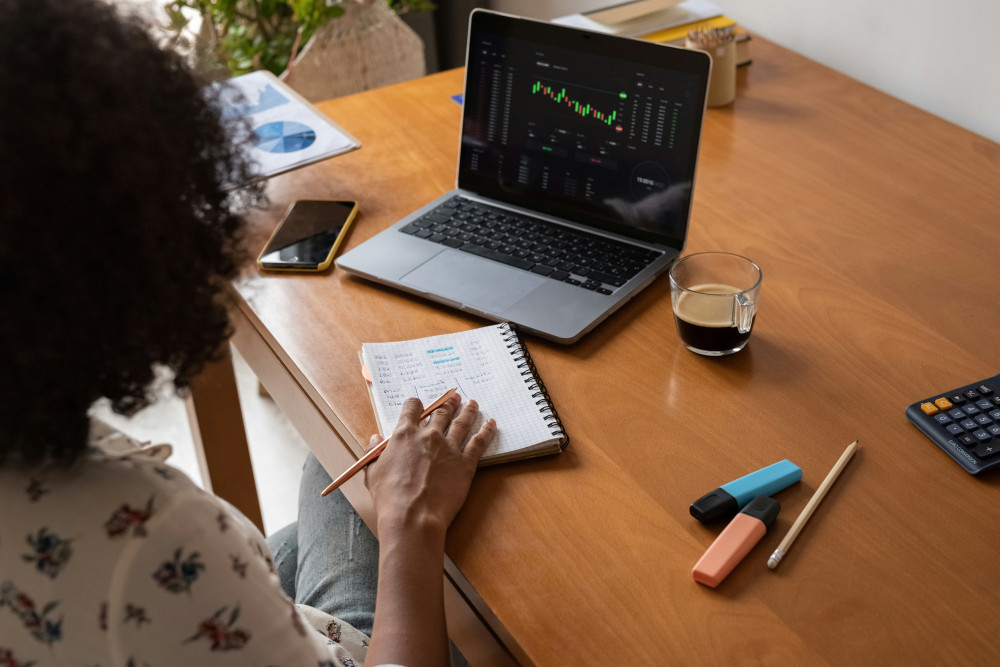
A simple but powerful tool is to keep an investment journal. Write down why you make each decision, what you expect to happen, and how you feel at the time. When you look back later, you’ll be able to spot patterns – both good and bad.
You might notice that you tend to buy too quickly after a price rise, or that you sell too early out of fear of loss. These insights are invaluable because they help you understand your own psychological tendencies.
Create distance between past mistakes and future choices
Once you’ve analysed a mistake, let it go. That doesn’t mean forgetting it – it means not allowing it to colour your future decisions. If you lost money on a particular company, that doesn’t mean the entire sector is “risky”. It simply means you should pay attention to what went wrong last time.
Creating mental distance takes practice. Some investors use routines – such as waiting 24 hours before reacting to market movements – to avoid impulsive decisions. Others rely on regular, automated investments to reduce emotional influence.
Think long term – and be patient
Most investment mistakes feel significant in the moment but small in the long run. If you invest with a horizon of 10, 20 or 30 years, individual errors rarely ruin your overall results. The key is to keep learning, adjusting, and sticking to your plan.
Long-term success isn’t about avoiding mistakes; it’s about managing them wisely. When you learn to see mistakes as data rather than defeats, you become a more resilient and rational investor.
Conclusion: Mistakes as a foundation for better decisions
Learning from your investment mistakes is about finding the balance between reflection and forward thinking. You need the courage to face your errors, but also the discipline to move on from them. That combination of self-awareness, patience and consistency is what defines a skilled investor.
So next time you make a mistake, don’t ask, “How can I avoid this ever happening again?” – ask instead, “What can I learn from it, without letting it control me?” That’s how you grow – one decision at a time.
Læs også: